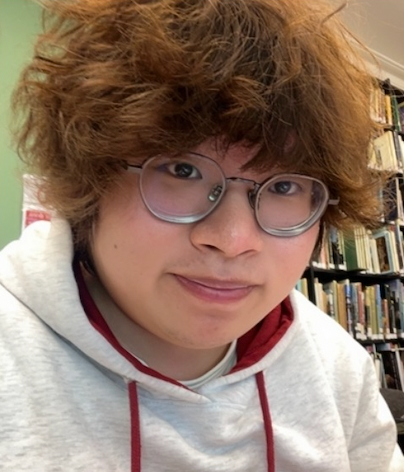
How to pronounce my name: Qīng, pronounced like “Ching” (rhymes with “sing”), Xiāo, pronounced like “Shyao” (rhymes with “meow” but starts with a ‘sh’ sound).
I’m Qing Xiao, a second-year PhD student at the Human-Computer Interaction Institute within the School of Computer Science at Carnegie Mellon University, advised by Dr. Hong Shen and part of the CARE (Collective AI Research and Evaluation) Lab.
My research focuses on the future of human–AI relationships, examining what happens when AI enters domains once considered uniquely human. Today’s AI systems don’t just process information; they persuade, empathize, create, and collaborate, increasingly encroaching on the professional expertise, creative capacities, and social relationships that have long defined human life. As these boundaries blur, fundamental questions arise about how human life and society are reshaped. My research investigates how people interact with these increasingly capable AI systems, how such systems can be designed to function as effective and responsible partners, and what design and policy principles should govern the evolving relationship between humans and AI.
Specifically, my research spans three interconnected levels:
- Individual level: As AI systems enter intimate and private spheres, how do they introduce new forms of emotional and relational attachment, and how can design and policy interventions support healthy, responsible engagement?
- Organizational level: As AI systems become embedded in the workplace, how do they transform professional practices and team accountability, and how might they be designed and governed to support responsible, collaborative work?
- Policy level: What governance challenges arise from the evolution of human–AI relationships as AI systems grow increasingly socially capable? How can emerging risks be anticipated and mitigated?
Selected Publications
For a full list of publications see here. Also in Google Scholar.
- Xianzhe Fan*, Qing Xiao*, Xuhui Zhou, Yuran Su, Zhicong Lu, Maarten Sap, and Hong Shen. 2026.
Minion: A technology probe to explore how users negotiate harmful value conflicts with AI companions. [Link]
arXiv. (*Co-First Author)
- Qing Xiao, Rongyi Chen, Jingjia Xiao, Tianyang Fu, Alice Qian, Xianzhe Fan, Bingbing Zhang, Zhicong Lu, and Hong Shen. 2026.
Constructing algorithmic authority: How Multi-Channel Networks (MCNs) govern live-streaming labor in China. [Link]
arXiv.
- Qing Xiao, Qing (Diane) Hu, Jingjia Xiao, Hancheng Cao and Hong Shen. 2026.
Can GenAI move from individual use to collaborative work? Experiences, challenges, and opportunities of coordinating GenAI into collaborative newswork. [Preprint]
CHI’26.
- Ruiwei Xiao*, Qing Xiao*, Xinying Hou, Phenyo Phemelo Moletsane, Hanqi Jane Li, Hong Shen, and John Stamper. 2026.
Do teachers dream of GenAI widening educational (in) equality? Envisioning the future of K-12 GenAI education from global teachers’ perspectives. [Preprint]
CHI’26. (*Co-First Author)
- Qing Xiao, Xianzhe Fan, Felix M. Simon, Bingbing Zhang and Motahhare Eslami. 2025.
“It might be technically impressive, but it’s practically useless to us”: Motivations, practices, challenges, and opportunities for cross-functional collaboration around AI within the news industry. [ACM Library] [Preprint] [Blog Article]
CHI’25.
- Qing Xiao, Yuhang Zheng, Xianzhe Fan, Bingbing Zhang and Zhicong Lu. 2025.
Let’s influence algorithms together: How millions of fans build collective understanding of algorithms and organize coordinated algorithmic actions. [ACM Library] [Preprint]
CHI’25.
Teaching
- Spring 2024, Academic Tutor, Fandom Studies (Tutorial), Magdalen College, University of Oxford
- Autumn 2021, Teaching Assistant, Political Communication, Communication University of China
- Spring 2021, Teaching Assistant, International Journalism, Communication University of China
- Autumn 2020, Teaching Assistant, Quantitative Research Method, Communication University of China
Research Mentorship
- 2025, Qing (Diane) Hu – Master, Interaction Design, Carnegie Mellon University. Co-authored papers published at CHI 2026 * 3 (Full Paper).
- 2025, Ziyan (Ethan) Xin – Undergraduate, Computational Neuroscience, Carnegie Mellon University. Co-developed an LLM-based journalism assistant system for Public Source, a nonprofit news organization serving the Pittsburgh region.
- 2024, Xianzhe Fan – Undergraduate, Tsinghua University, Summer Intern at CMU. Co-authored papers published at CHI 2025 * 4 (Full Paper) and VRST 2024 (Poster). First placement: PhD Student, Computer Science, The University of Hong Kong.
- 2024, Zihe Ran – Undergraduate, Communication, Communication University of China. Co-authored papers published at ASSETS 2025 (Full Paper), CHI 2025 (Full Paper) and VRST 2024 (Poster); First placement: MSc Student, Oxford Internet Institute, University of Oxford.
- 2024, Xiyu Li – Undergraduate, Communication, Communication University of China. Co-authored paper published at ASSETS 2025 (Full Paper) and CHI 2025 (Full Paper); First placement: MSc Student, Institute of Communication Studies, Communication University of China.
Services
- Ad Hoc, Manuscript Reviewer, ACM CHI (8), ACM CSCW (2), ACM UIST (1), ACM DIS (2), ACM/IEEE HRI (3), ACM IDC (2), ACM CHI Late-Breaking Work/Poster (6), Journalism Studies (1), Journal of Contemporary China (1), Scientific Reports (1), ICLS (1), Transformative Works and Cultures (1), In-Mind Magazine (in-mind.org) (1), NeurIPS Workshop (3), AIED Workshop (3), ICA Conference (20+), NCA Conference (10+), AEJMC Conference (10+), AEJMC Southeast Colloquium (2).
*Special Recognitions for Outstanding Reviews: CHI 2026 * 2; UIST 2025; CSCW 2024
- 2025, Student Volunteer, CMU HCII PhD Open House
- 2023-2024, Student Representative, Oxford Internet Institute, University of Oxford
Fun Fact
- My first name, “卿,” is one of the oldest Chinese characters. In its original pictographic form, which dates back to the Shang Dynasty (ca. 1600–1046 BCE, about 3,600 to 3,100 years ago), the character depicts two people sitting across from each other on the ground, sharing a meal from a vessel filled with food or drink. The image embodies the act of gathering together to eat and drink. Over time, “卿” came to signify the closest forms of human bonds, between best friends, between husband and wife, or between a monarch and the trusted minister who shared the fate through life and death. I prefer to be called “Qing” (“卿”) because it carries both warmth and trust. On one level, it can be read as a simple invitation: let’s eat and drink together. On another, it conveys intimacy and loyalty: you are my best friend, the one I can trust most.